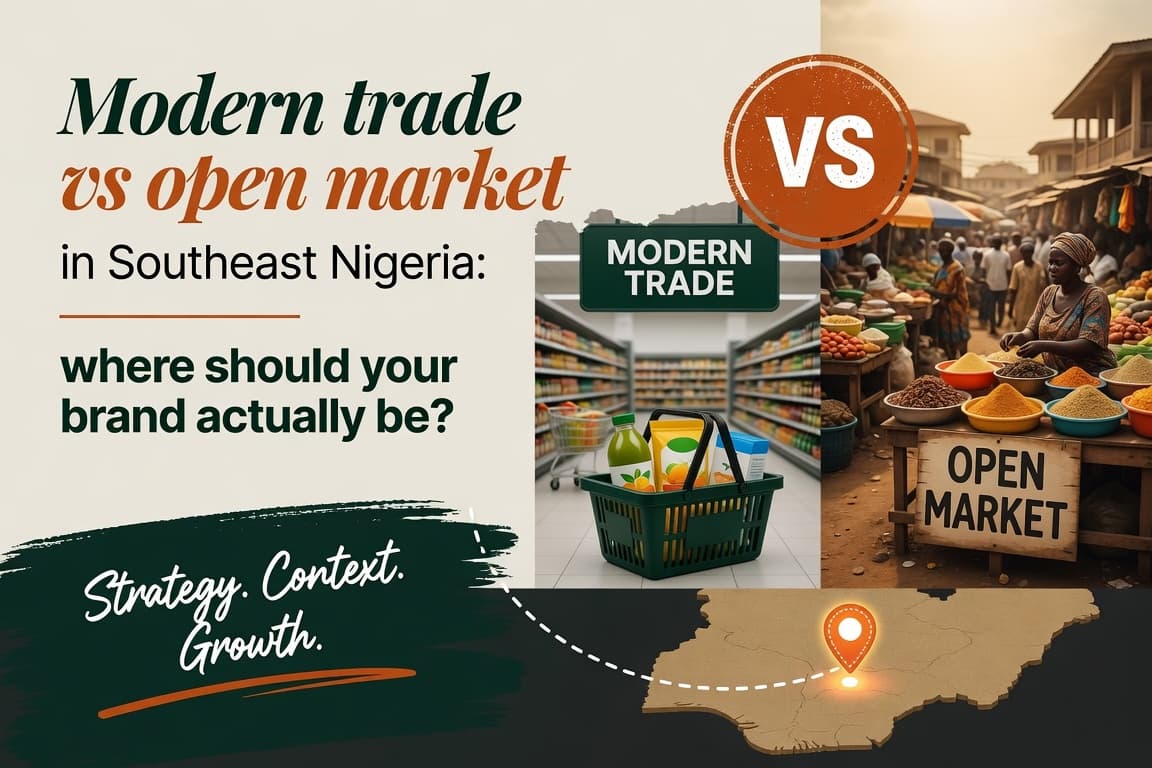
- Modern trade buys with purchase orders and measures suppliers on speed-to-store; open/general trade buys on availability and trust, route by route.
- The channels need different disciplines: PO-to-delivery tracking for supermarkets, route coverage and van-sales rhythm for the market.
- In the Southeast both channels are growing — the winning play is deliberate presence in each, not a default drift into one.
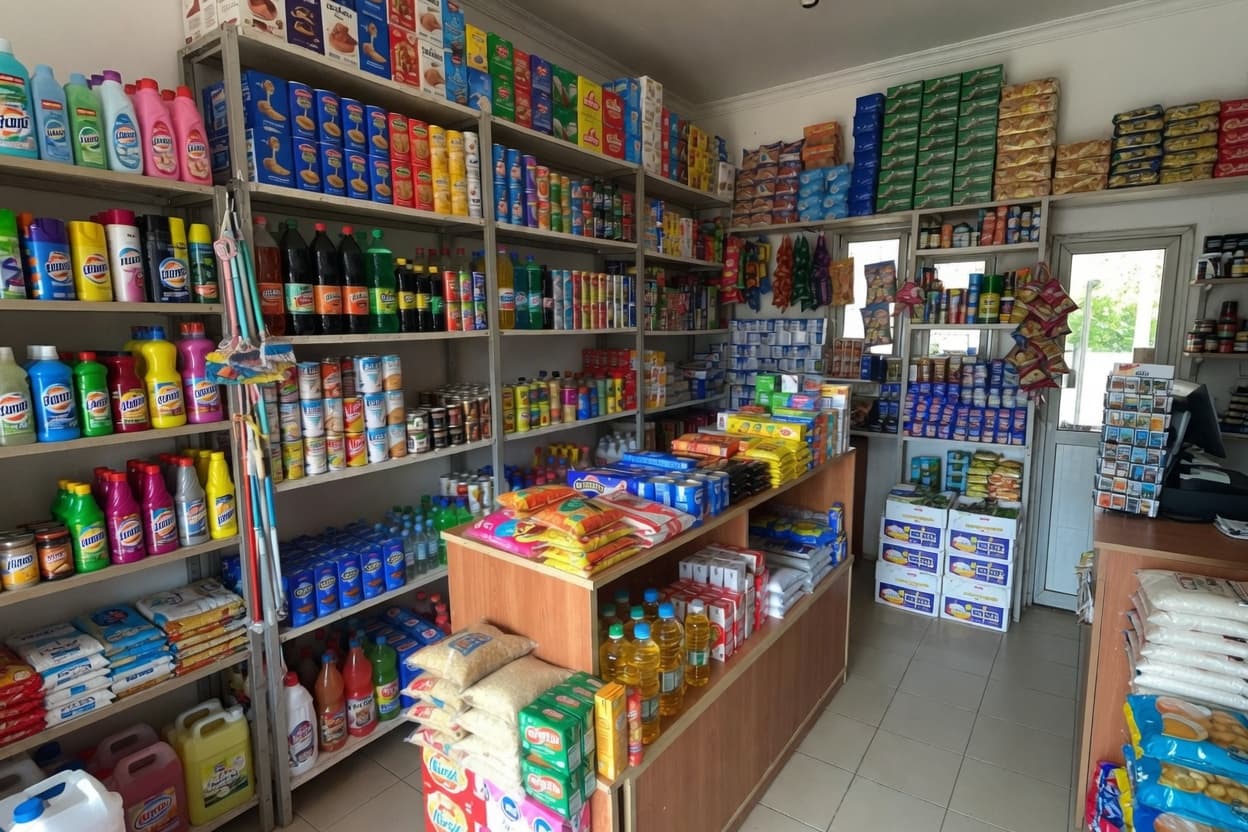
A supermarket in GRA and a table in a market lane might sell the same bottle of juice — and everything about how that bottle reached them is different. Purchase orders versus spot purchases; delivery windows versus 'is it in the van?'; listed prices versus negotiated ones. We serve both channels every day across the Southeast — supermarkets and institutions on one side, hundreds of neighbourhood outlets on the other — and the clearest lesson is that they are different businesses wearing the same cartons.
How modern trade actually buys
Modern trade is process. A supermarket raises a purchase order, expects confirmation, and measures its suppliers on one thing above all: speed-to-store — how quickly a PO becomes stock on their shelf. Miss windows and you don't get shouted at; you quietly stop being ordered from. The discipline it demands from a distributor is tracking every PO from receipt through picking to delivery, with dates on each step. It's paperwork-heavy, relationship-light, and utterly fair: perform and the orders continue.
How the open market actually buys
General trade is rhythm. The shop that buys two cartons weekly matters as much as the one that buys twenty monthly, because there are hundreds of her. She buys from whoever is reliably THERE — the rep who comes when he says, with stock in the van, at a price that doesn't wobble. The discipline it demands is route coverage: planned journeys, verified visits, orders captured at the shelf. Miss a fortnight and a competitor's van has your shelf space; the market forgives price before it forgives absence.
Where should your brand be?
Both — deliberately. Modern trade builds legitimacy, urban visibility and clean sell-out data; the open market builds volume and the deep availability that makes a brand feel Nigerian. What fails is drift: winning shelf listings you can't service on time, or flooding routes while ignoring the supermarkets your urban consumers actually visit. The practical question for any principal choosing a Southeast partner is simple: show me your PO speed-to-store on one screen and your route coverage on another. A distributor who can produce both, from records rather than memory, can carry a brand in both worlds. That's the operation we run — and the standard worth demanding from anyone who wants your cartons.